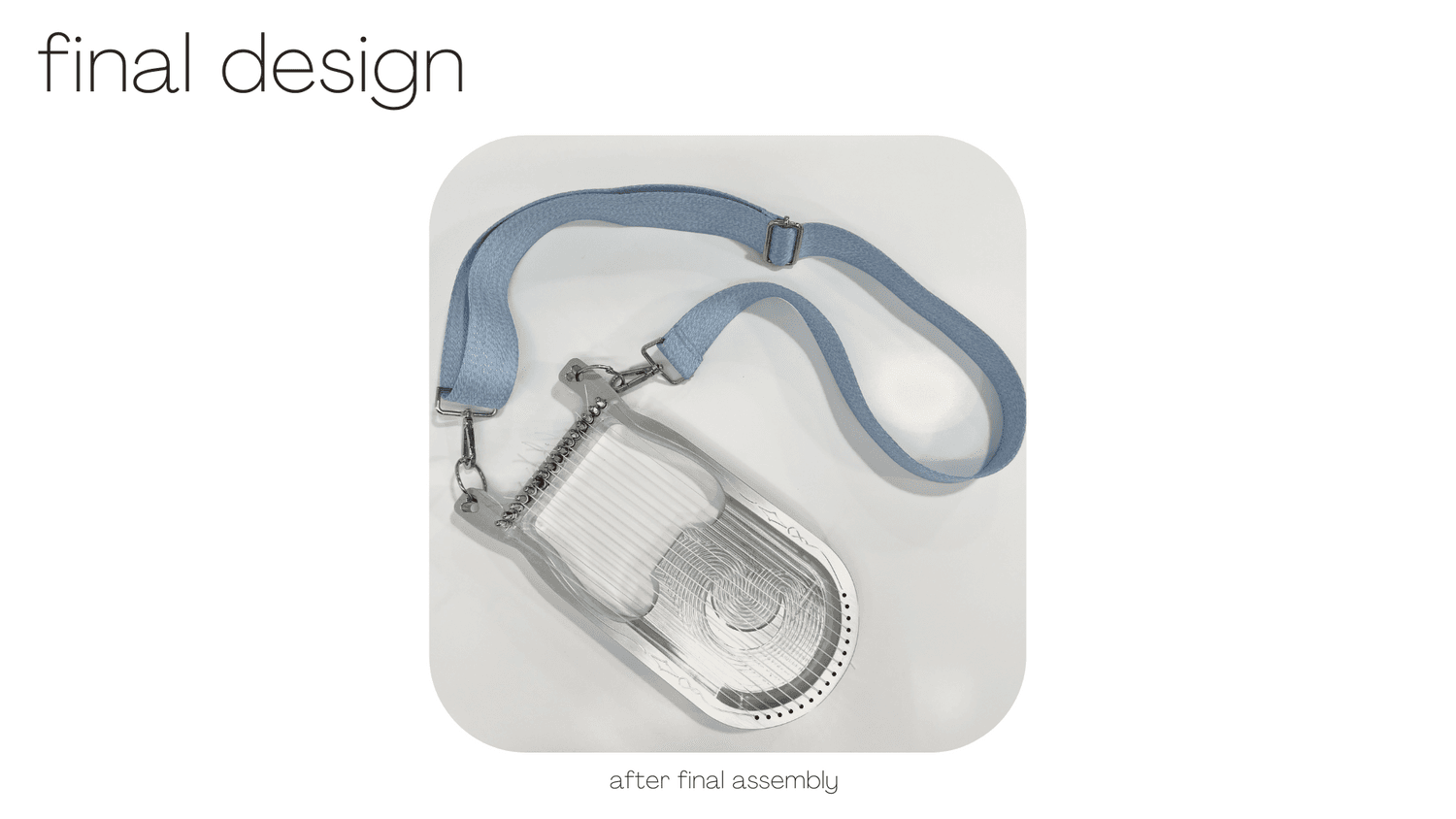
Harp instrument
Stanford, music + design
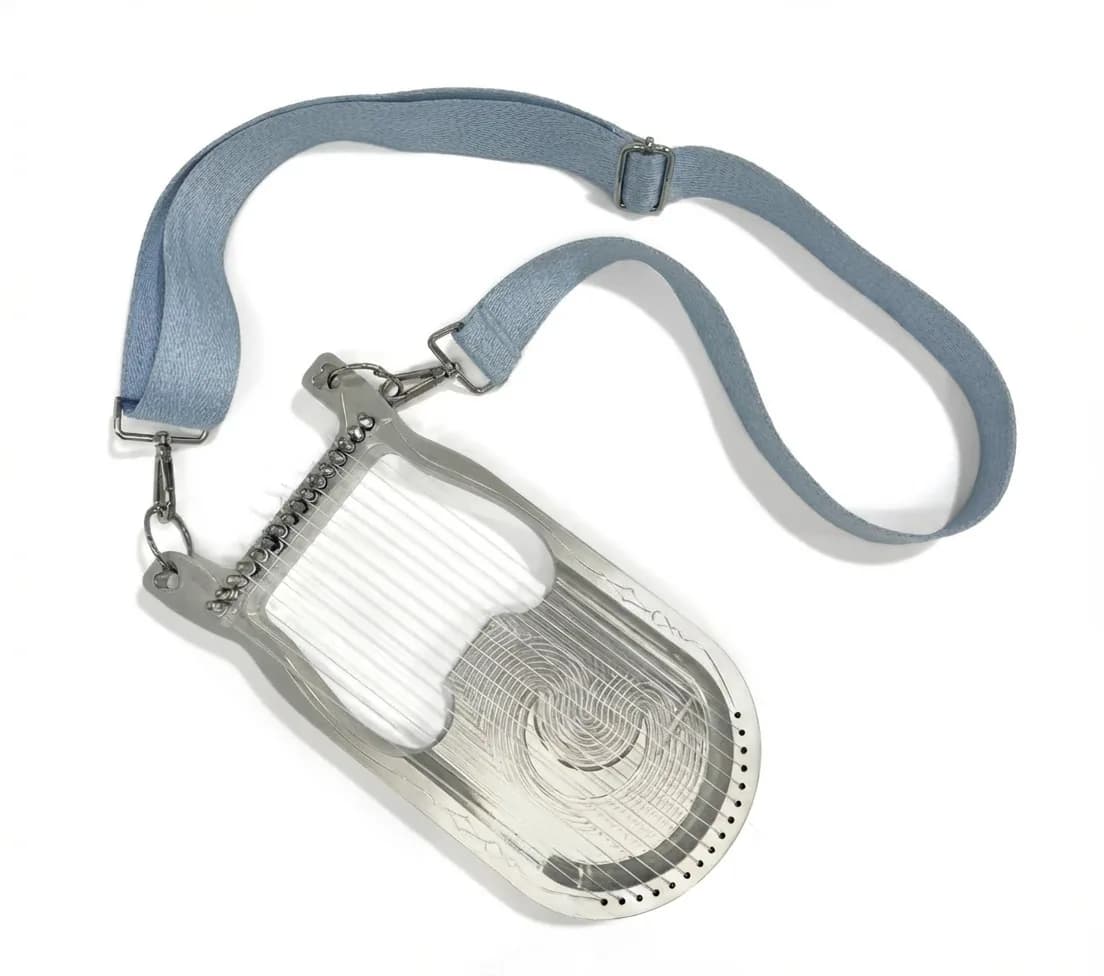
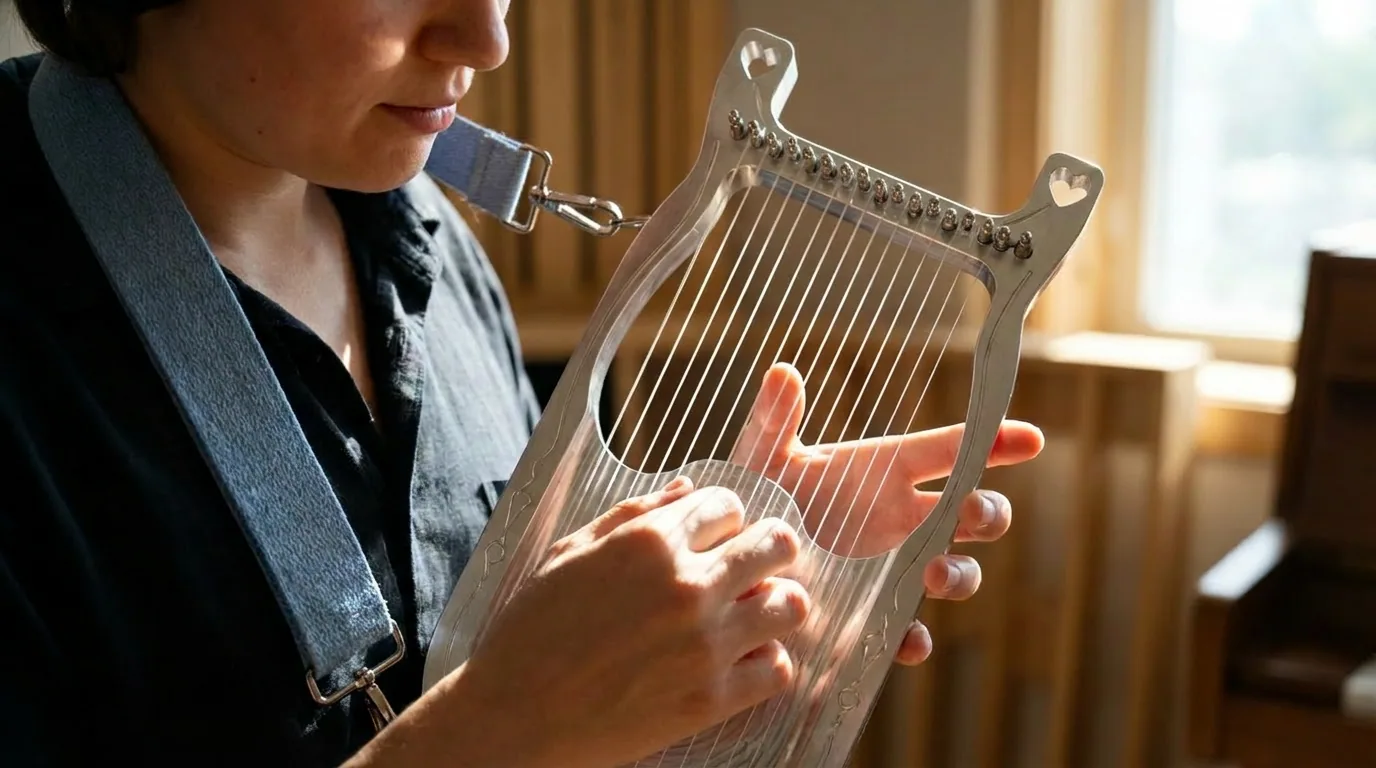
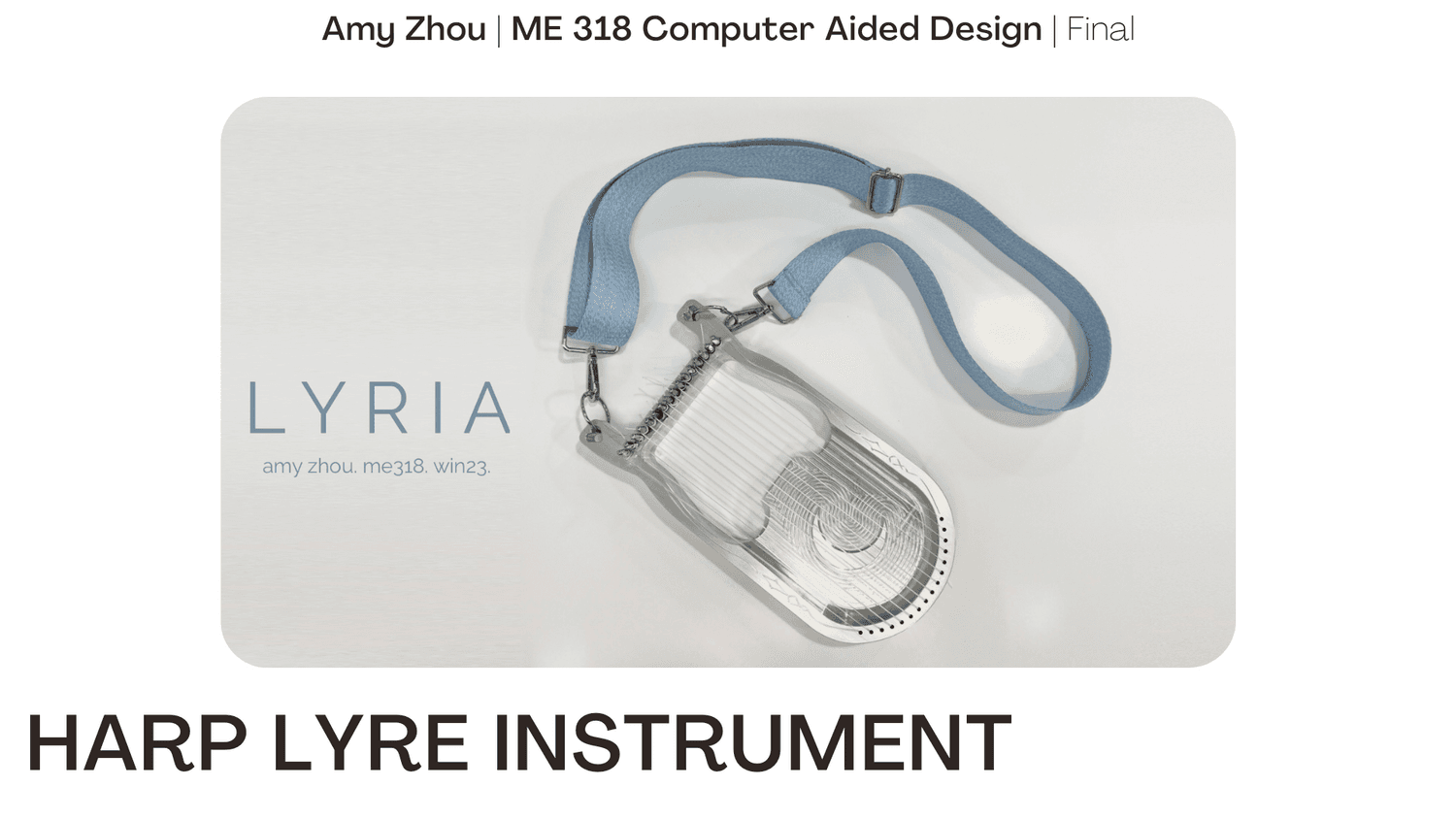
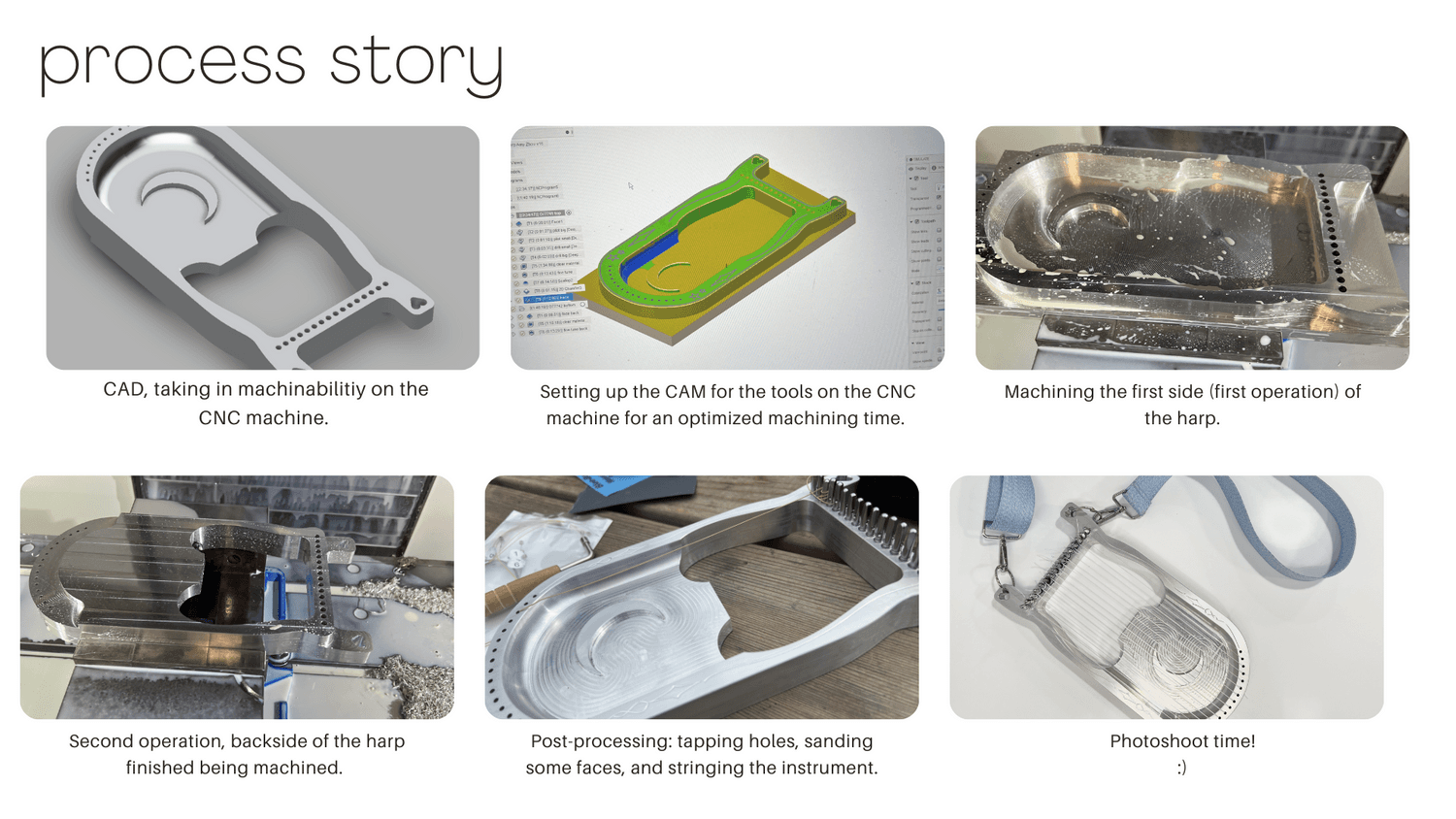
A small CNC-machined harp built for a Stanford music + product design class. Aluminum body, steel strings, tabletop scale rather than concert.
The structural challenge was tuning load. A small instrument carries a surprisingly large cumulative string tension, on the order of tens of pounds across the bridge, all of it pulling the frame inward. The frame had to resist that load without bowing past the threshold that would shift pitch perceptibly, and the tuning pegs had to develop enough static friction that a tuned string holds through a session.
Most of the engineering was structural. I sized the frame walls so deflection under full string tension stayed below the audibility threshold, and designed a tapered slot for each tuning peg so the friction increases as the string is brought up to pitch (the classic violin-peg trick, scaled down). The geometry was verified empirically: tune the instrument, walk away, come back in an hour and check.
Designing for sound is its own kind of discipline. You can't simulate timbre the way you can simulate stress; you build, you listen, you redistribute mass and string-anchor stiffness, and you build the next one. Recording linked below.