Taiyaki Jewelry
AI sketch-to-jewelry pipeline
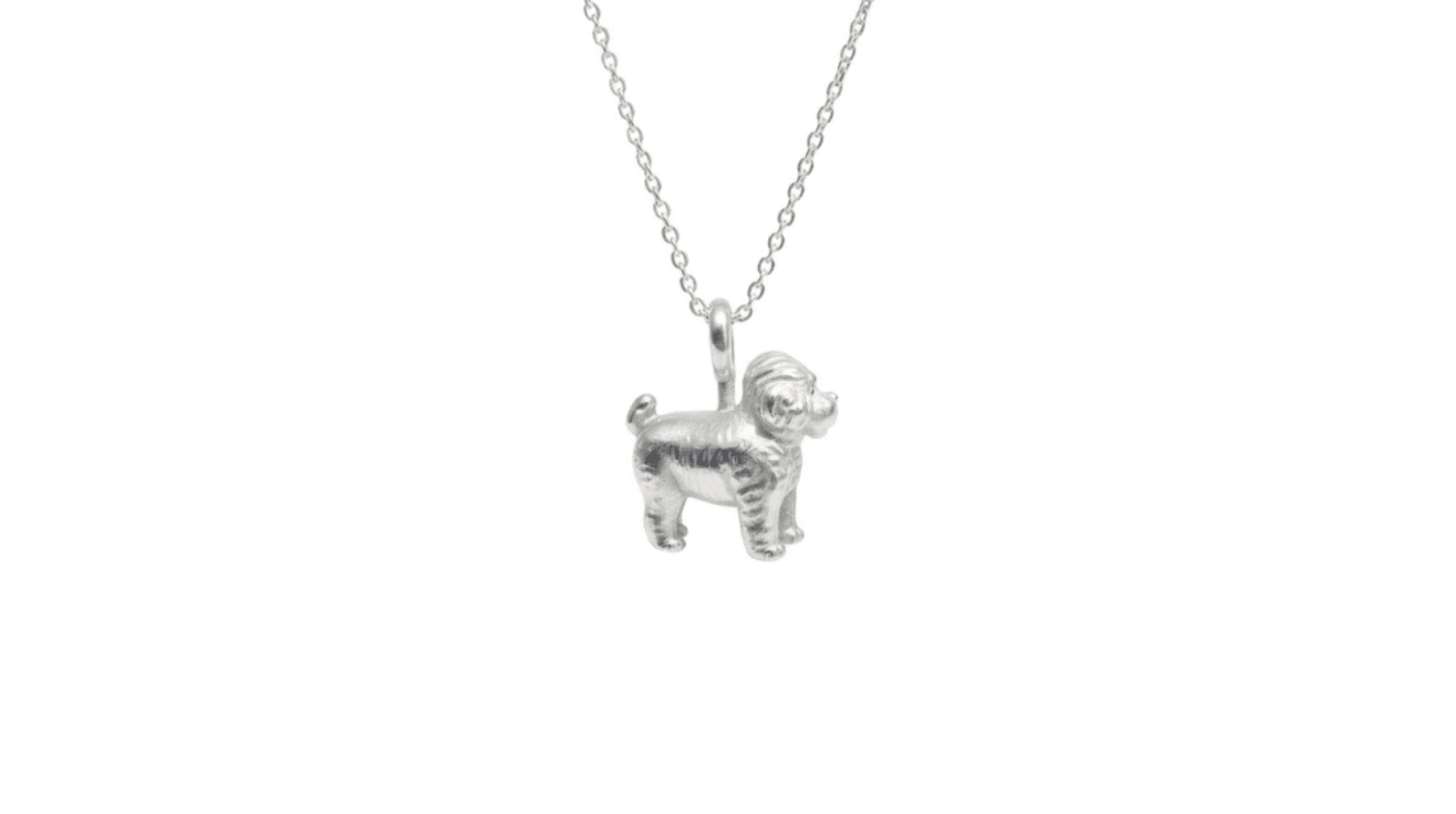
An AI pipeline that turns sketches, photos, and descriptions into finished metal jewelry.
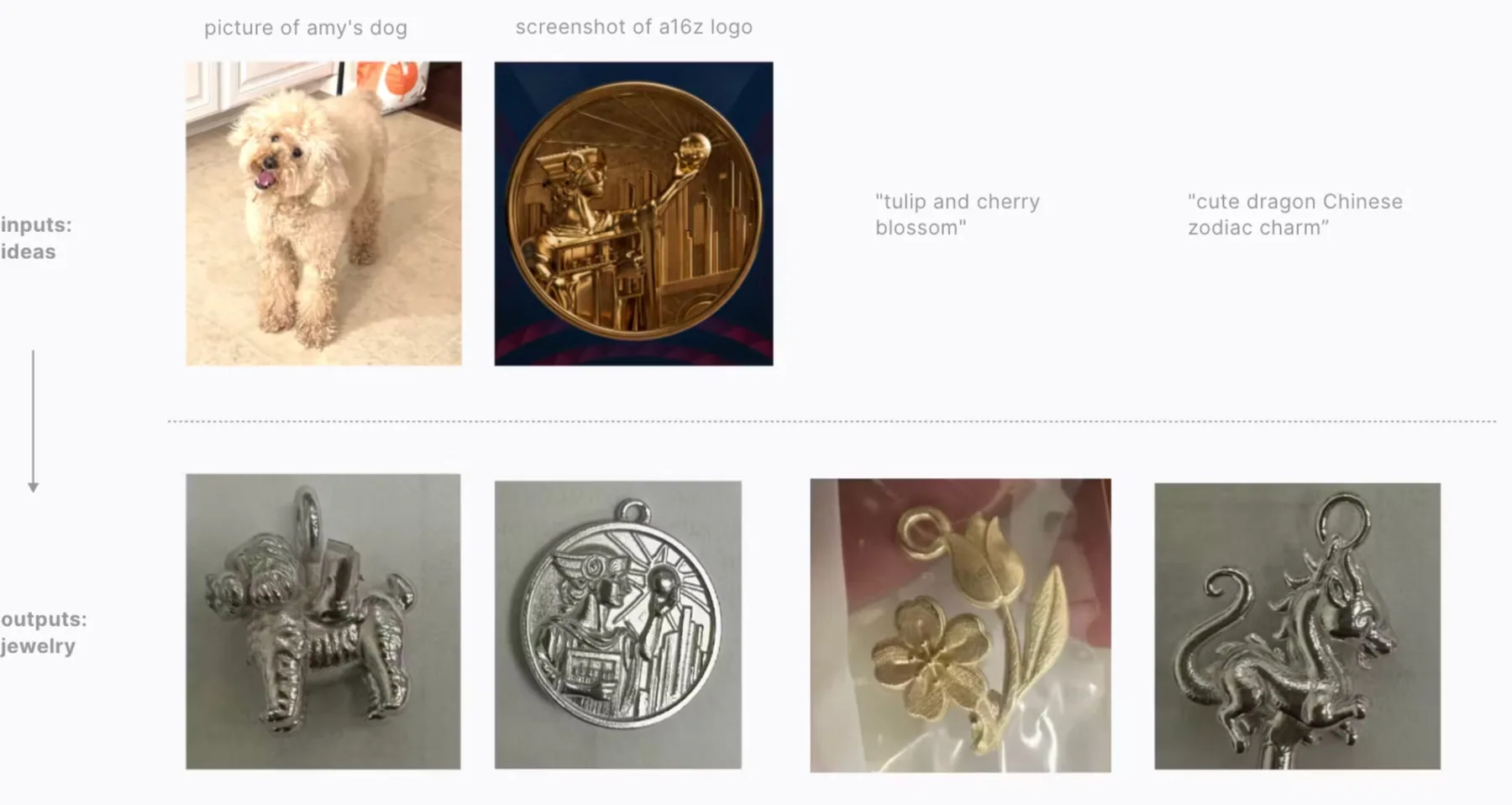
Taiyaki Jewelry pairs image-conditioned 3D generation with a CAD-style geometry cleanup stage and a traditional lost-wax casting workflow. A user's drawing or memory becomes a wearable piece in sterling silver, gold vermeil, or solid 14k gold.
Technical overview
The pipeline is engineered for *castability*, not just rendering. The output of the model has to survive being printed in resin, invested in plaster, burned out, replaced with molten metal, and finished by hand. Generative geometry that doesn't account for any of that physical reality produces a beautiful render and a broken casting.
Geometry pipeline
- Image understanding extracts silhouette, motif, and proportion from the user's sketch or reference
- A 3D generator produces a mesh aligned to that input
- A repair stage closes non-manifold edges and self-intersections so the model is watertight
- A thickness pass enforces consistent minimum wall thickness so thin features don't burn out
- A surface-conditioning pass smooths high-frequency mesh noise so the casting takes a clean polish
Manufacturability constraints
The cleanup stage encodes the rules that take a jewelry CAD designer years to internalize. Consistent minimum thickness for the alloy and section length. No unsupported overhangs that crack the wax pattern during burnout. Curvature limits on small features. Clean drafts on flat regions so the part demolds without flash.
Casting workflow
- Each model is 3D-printed in castable photopolymer resin at high resolution
- The print is sprued, invested in plaster, and burned out in a kiln
- Molten metal replaces the cavity in a centrifugal or vacuum cast
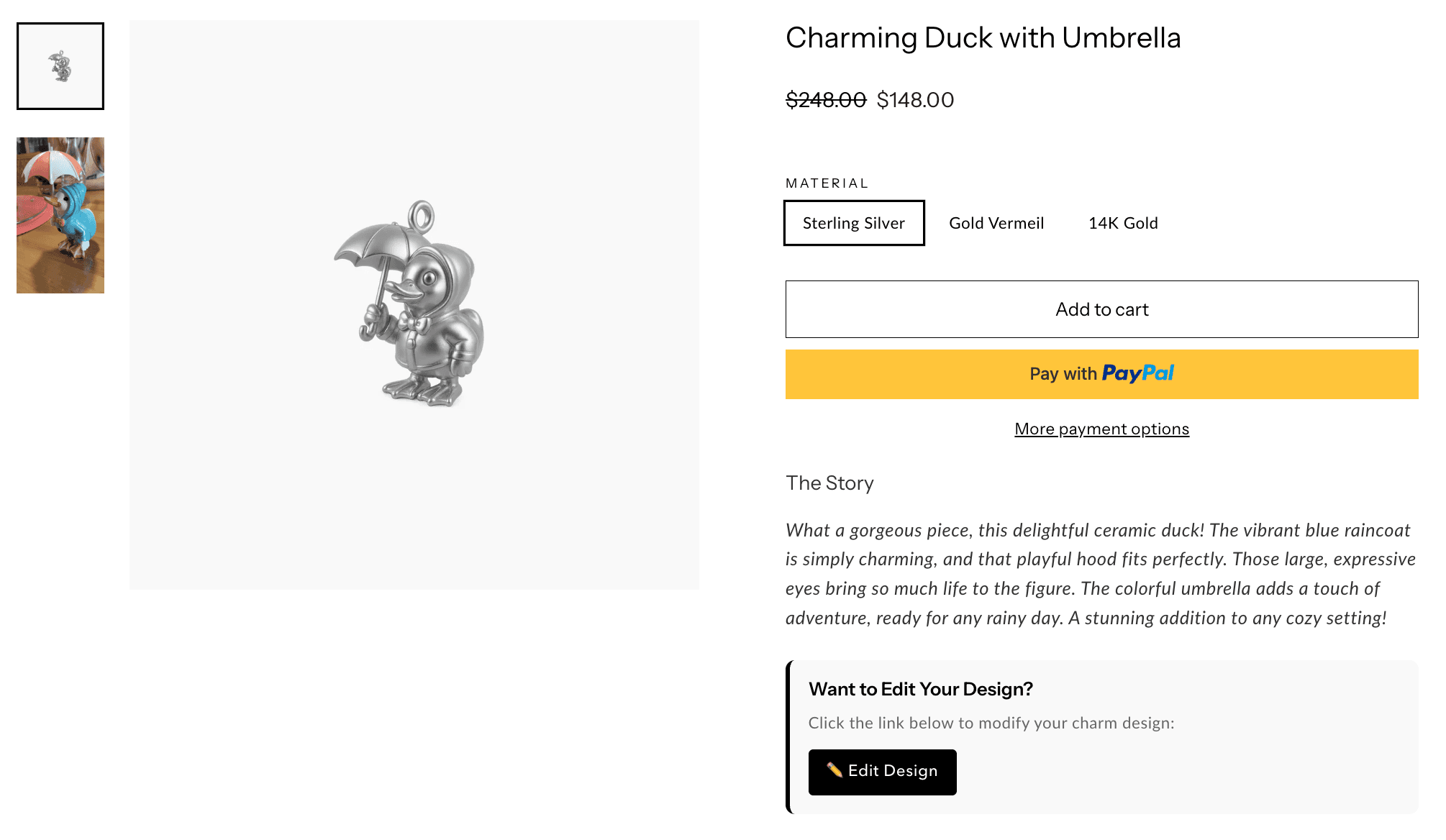
- Castings are filed, tumbled, and polished by metal artisans in California
Use cases
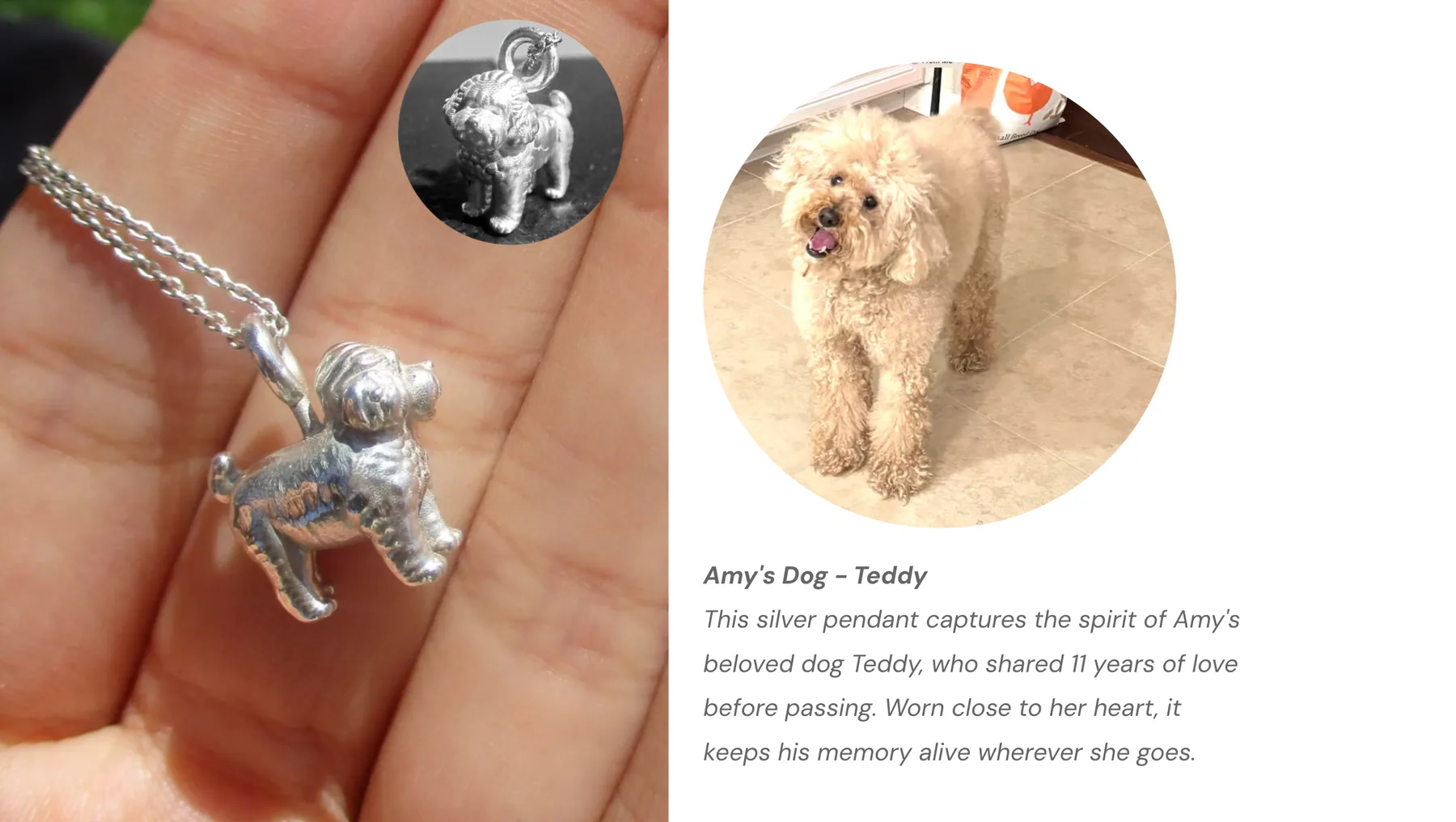
- Memorial pieces from a single photograph
- Custom commission work from a hand sketch
- Storytelling jewelry that wouldn't be economical to model in CAD from scratch