Injection-molded fabric
Stanford, ME 325 Injection Molding
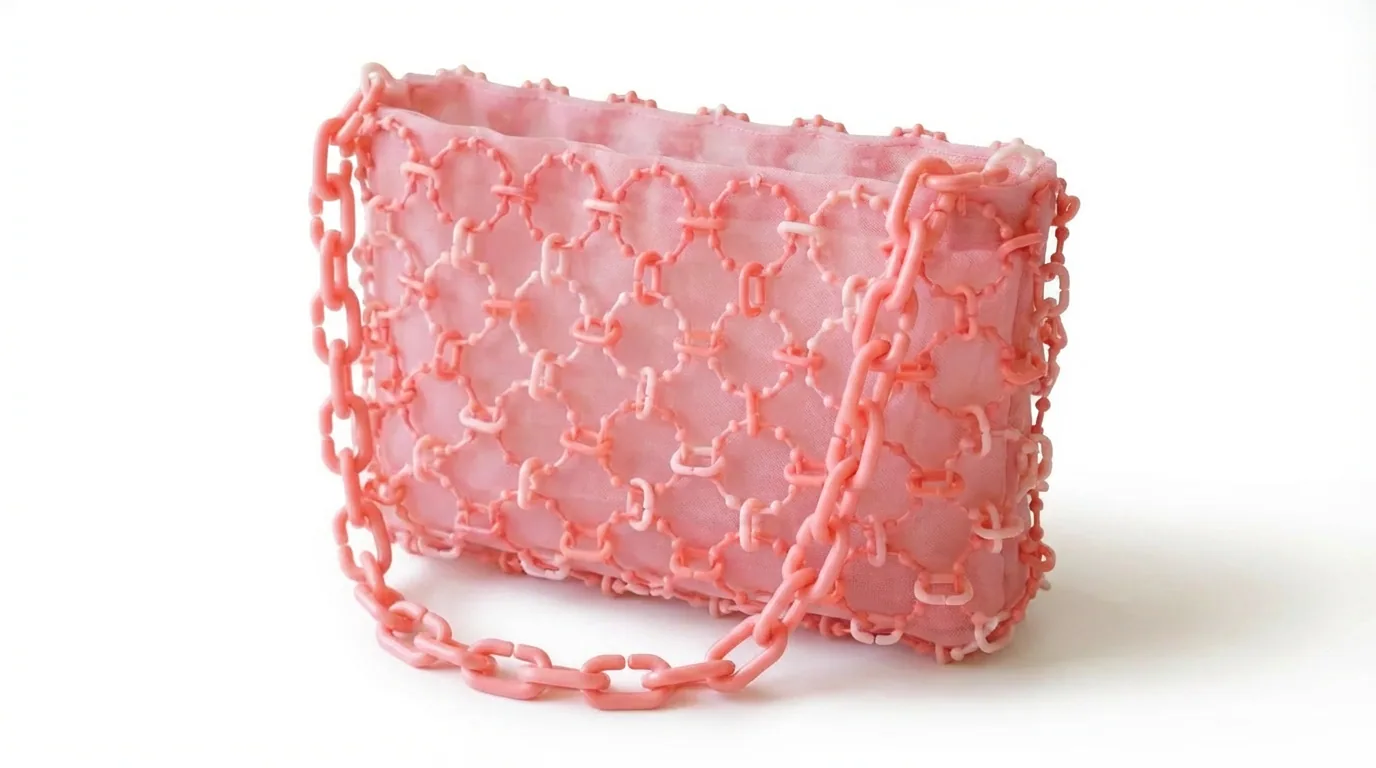
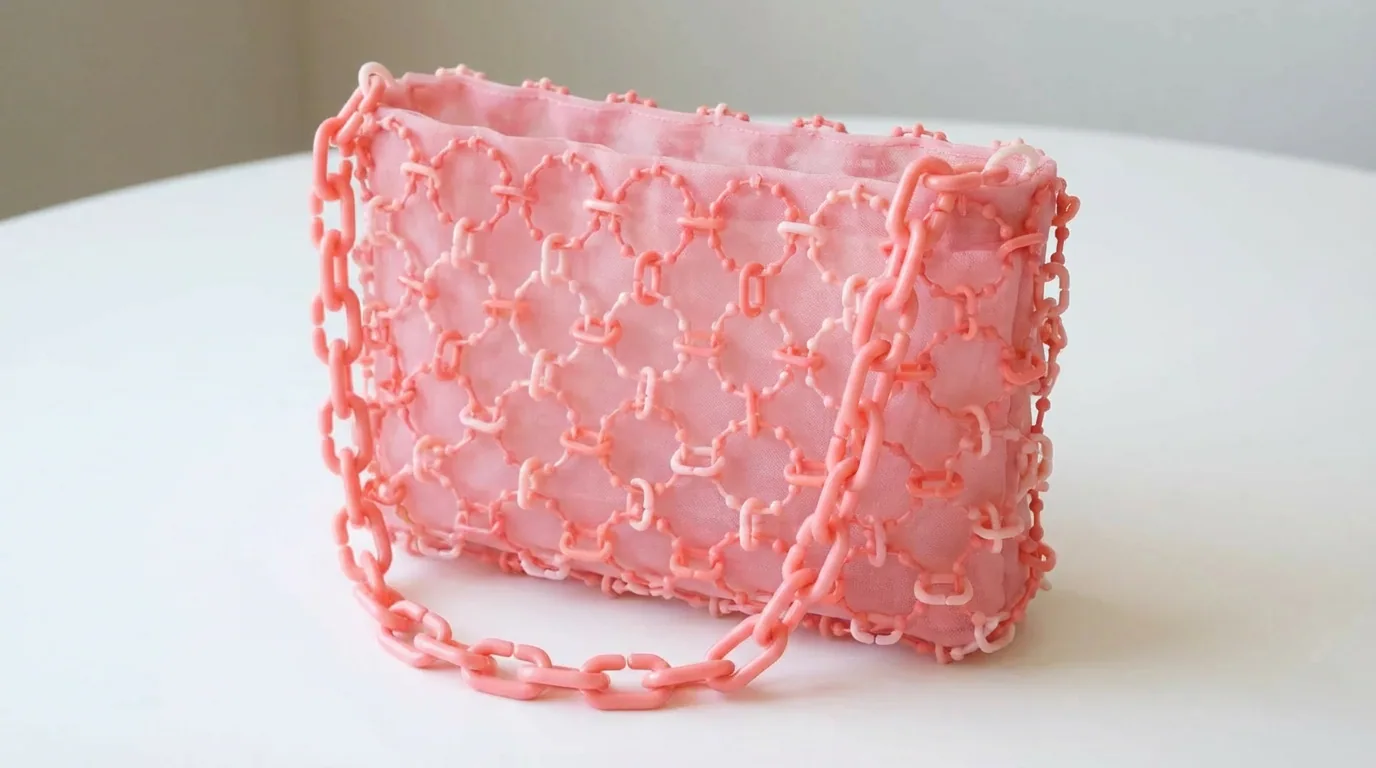
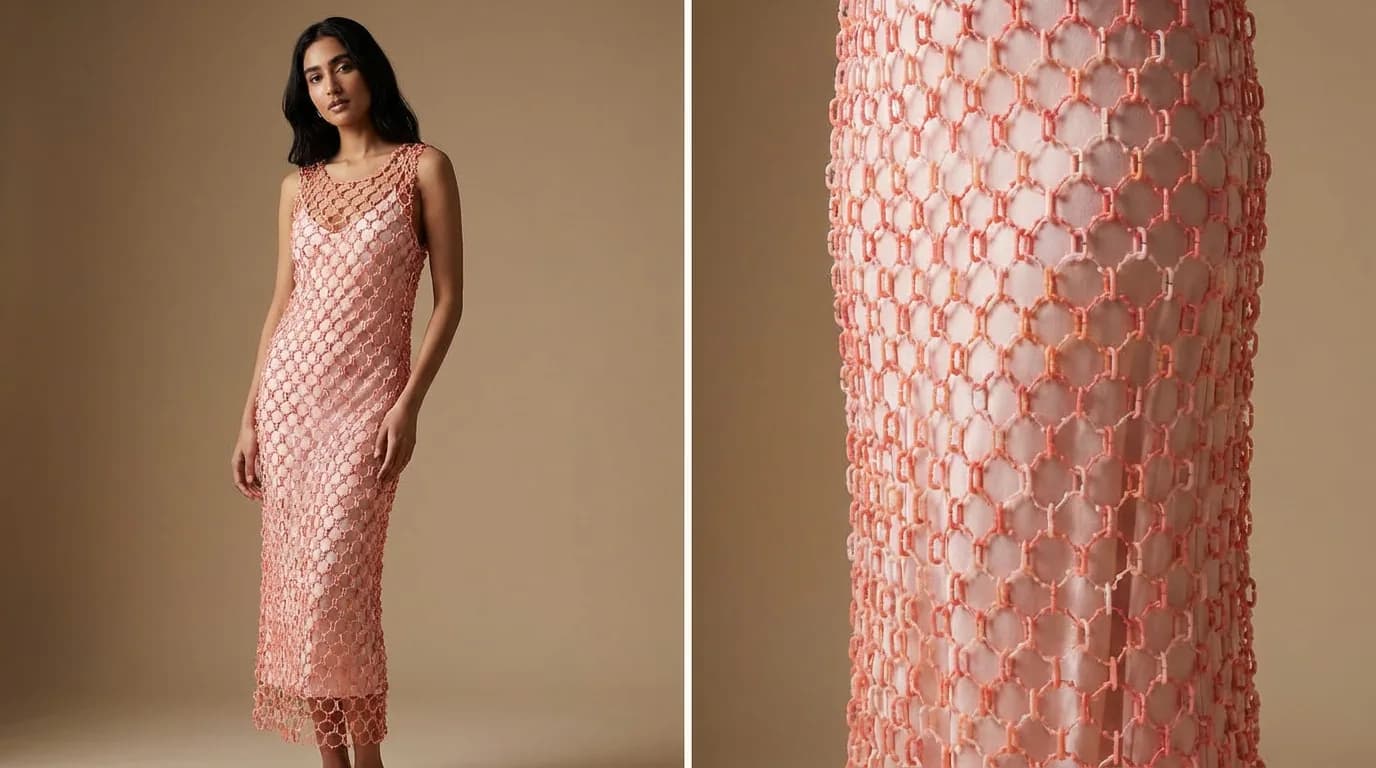
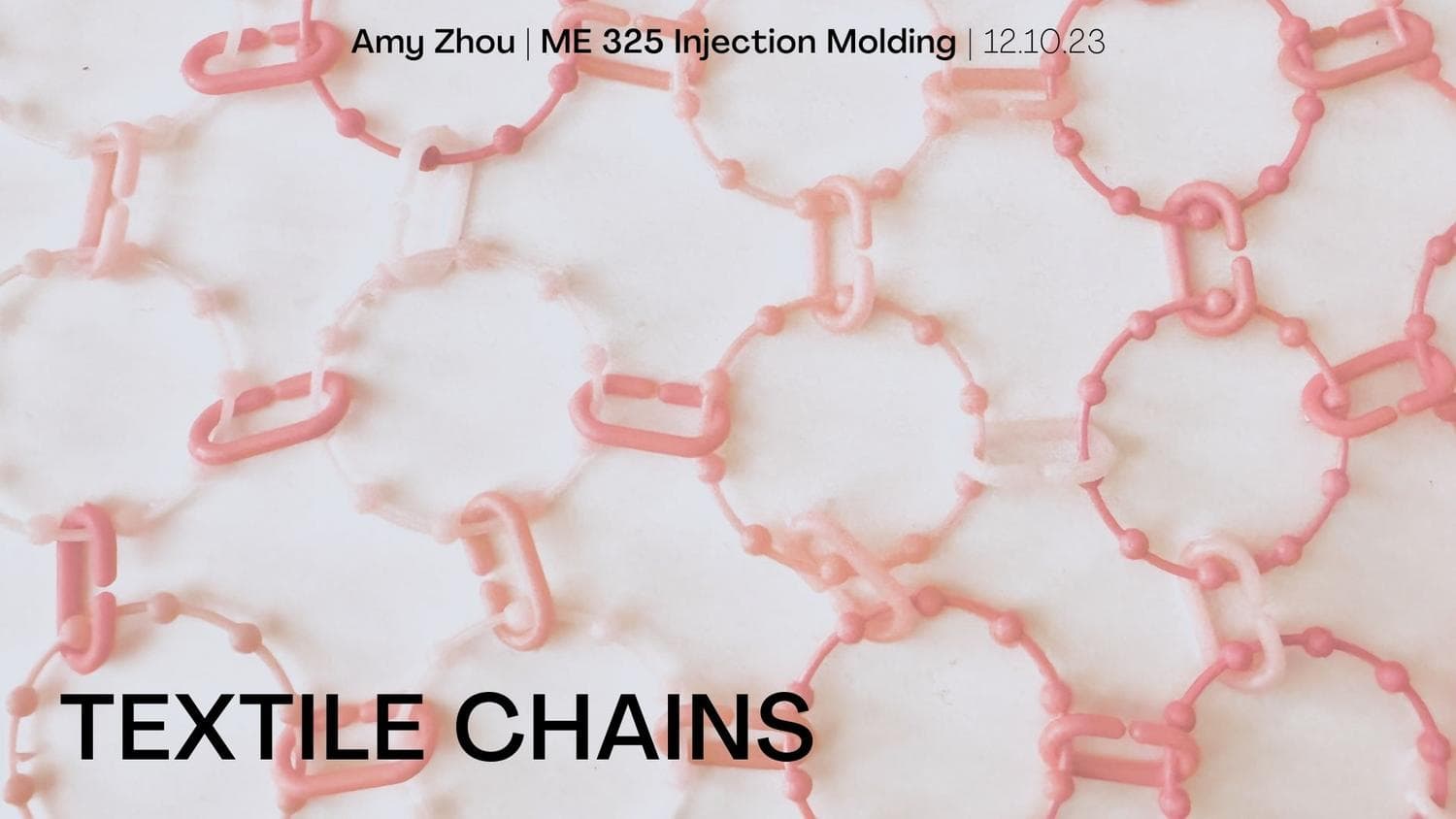
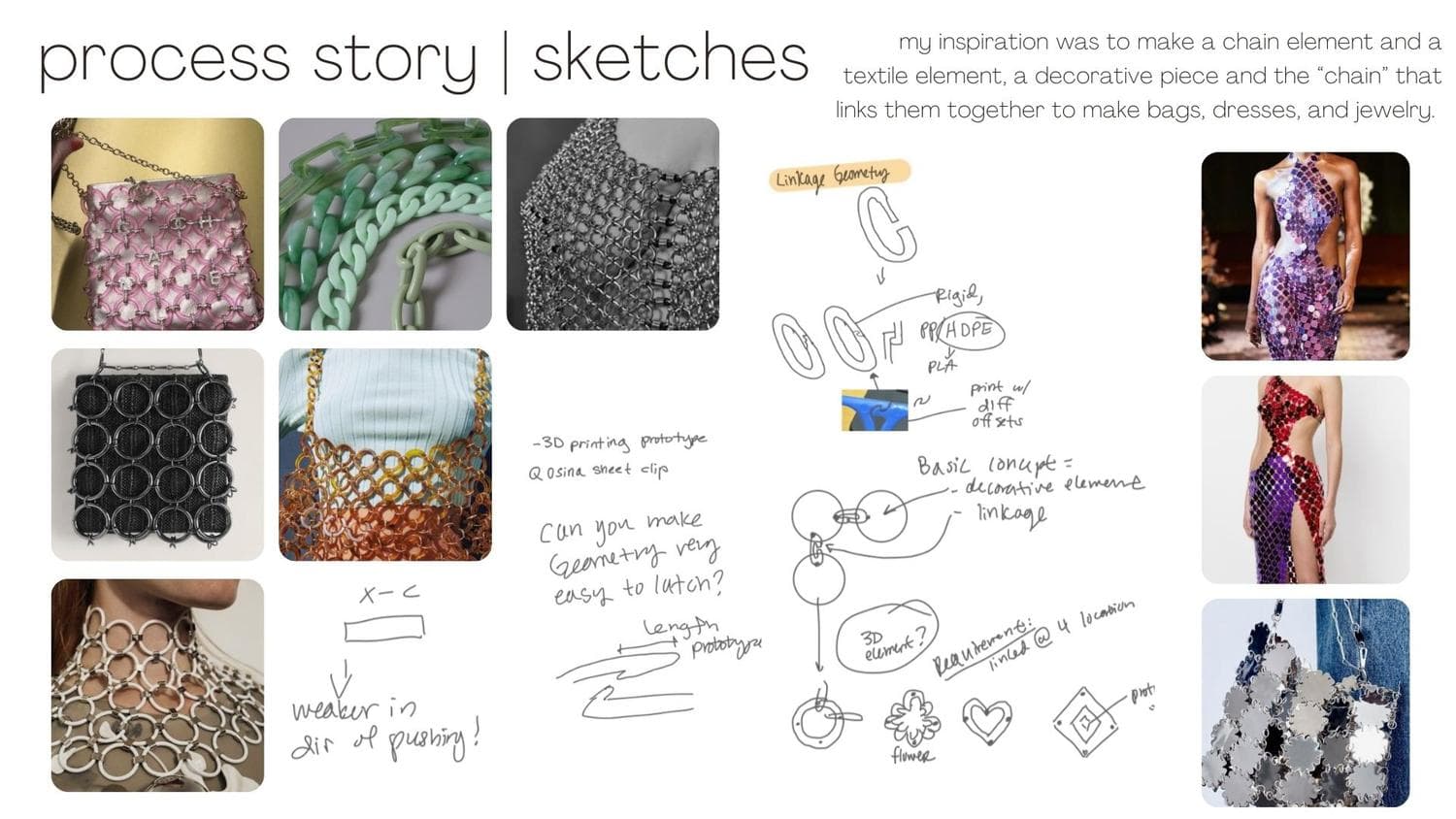
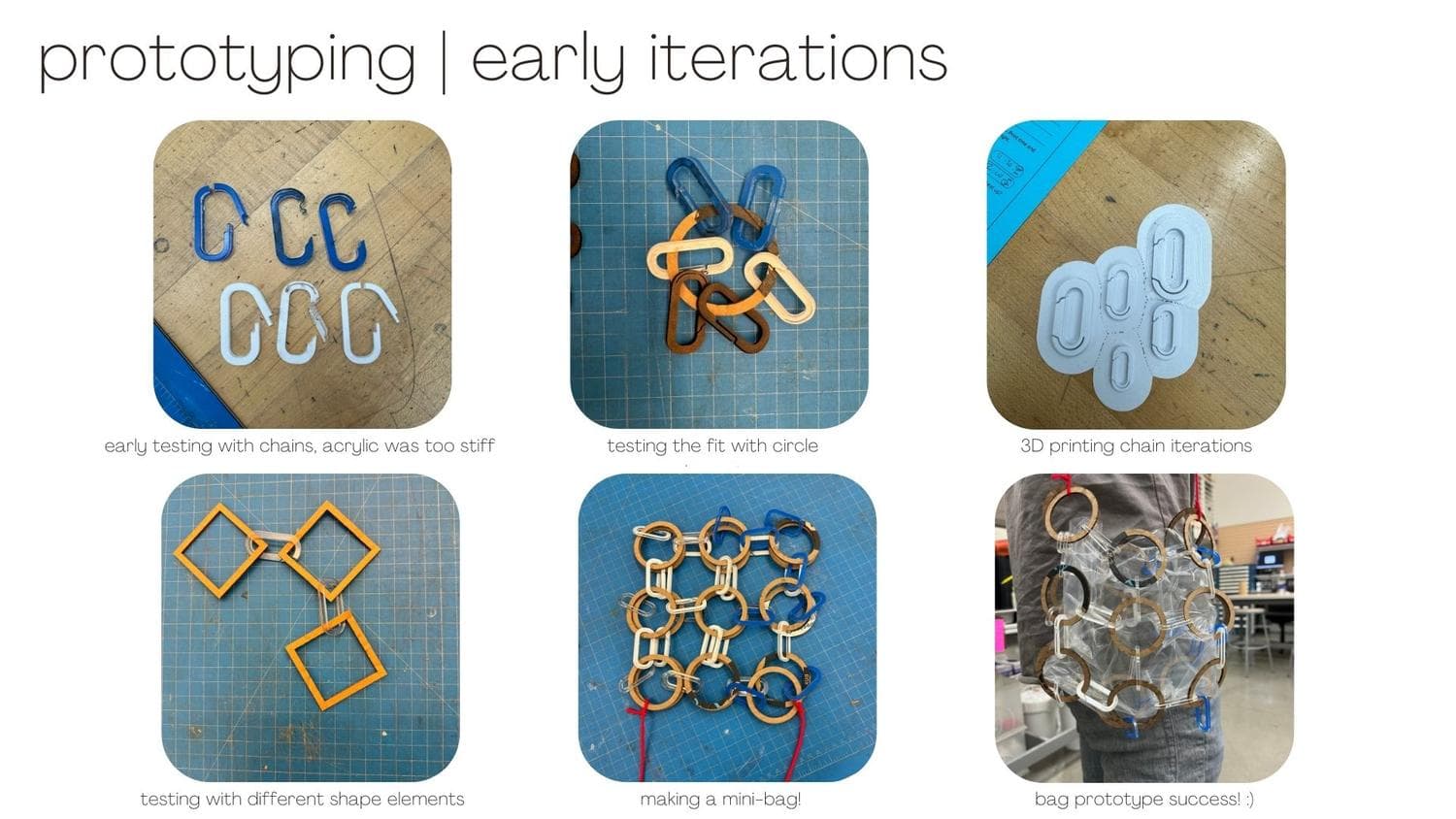
Experiments in injection-molding plastic structures that look and behave like textile, made for Stanford's ME 325 Injection Molding course. The pieces shown are pure plastic, no actual fabric anywhere; the woven appearance comes entirely from the cavity geometry.
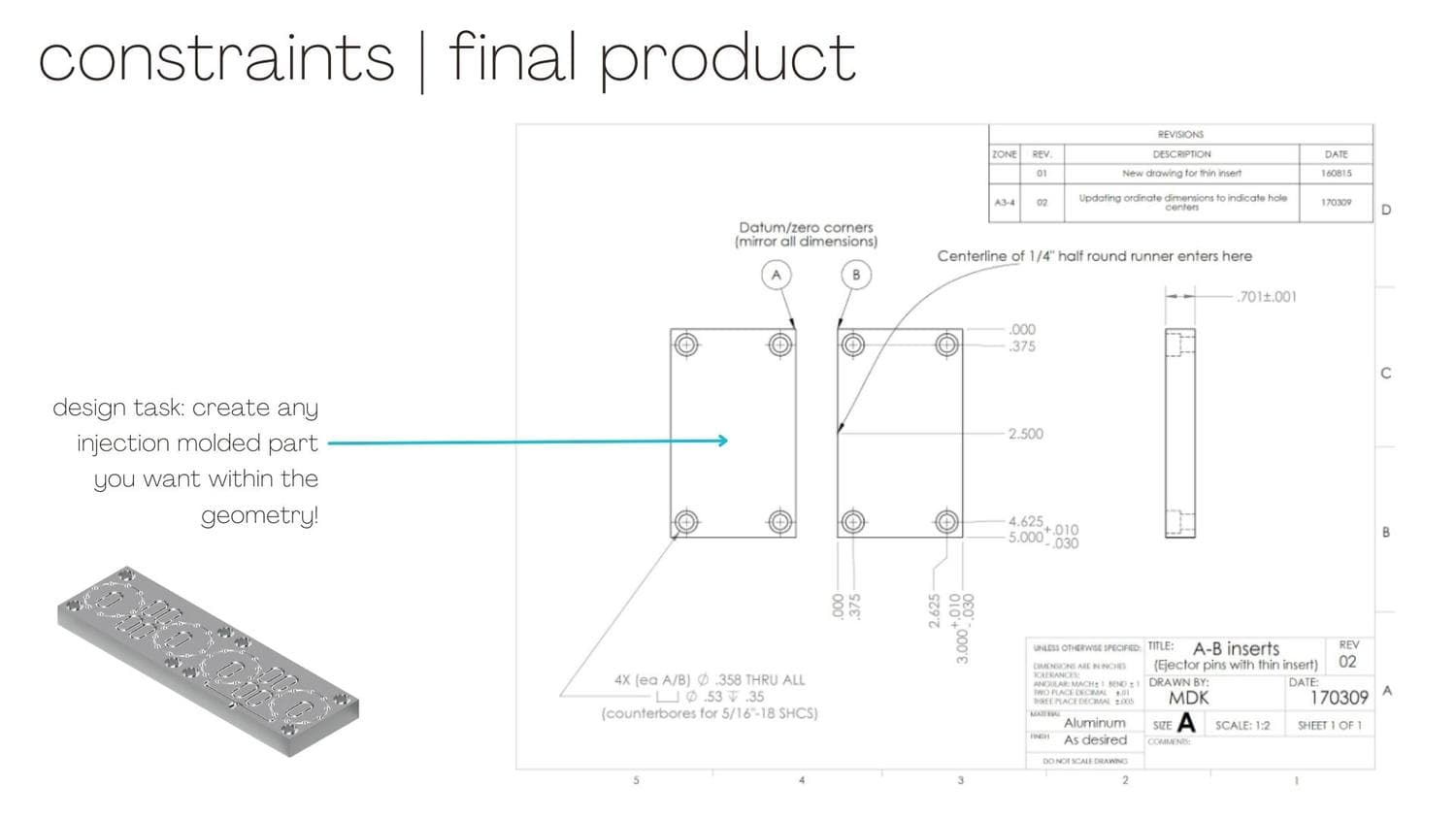
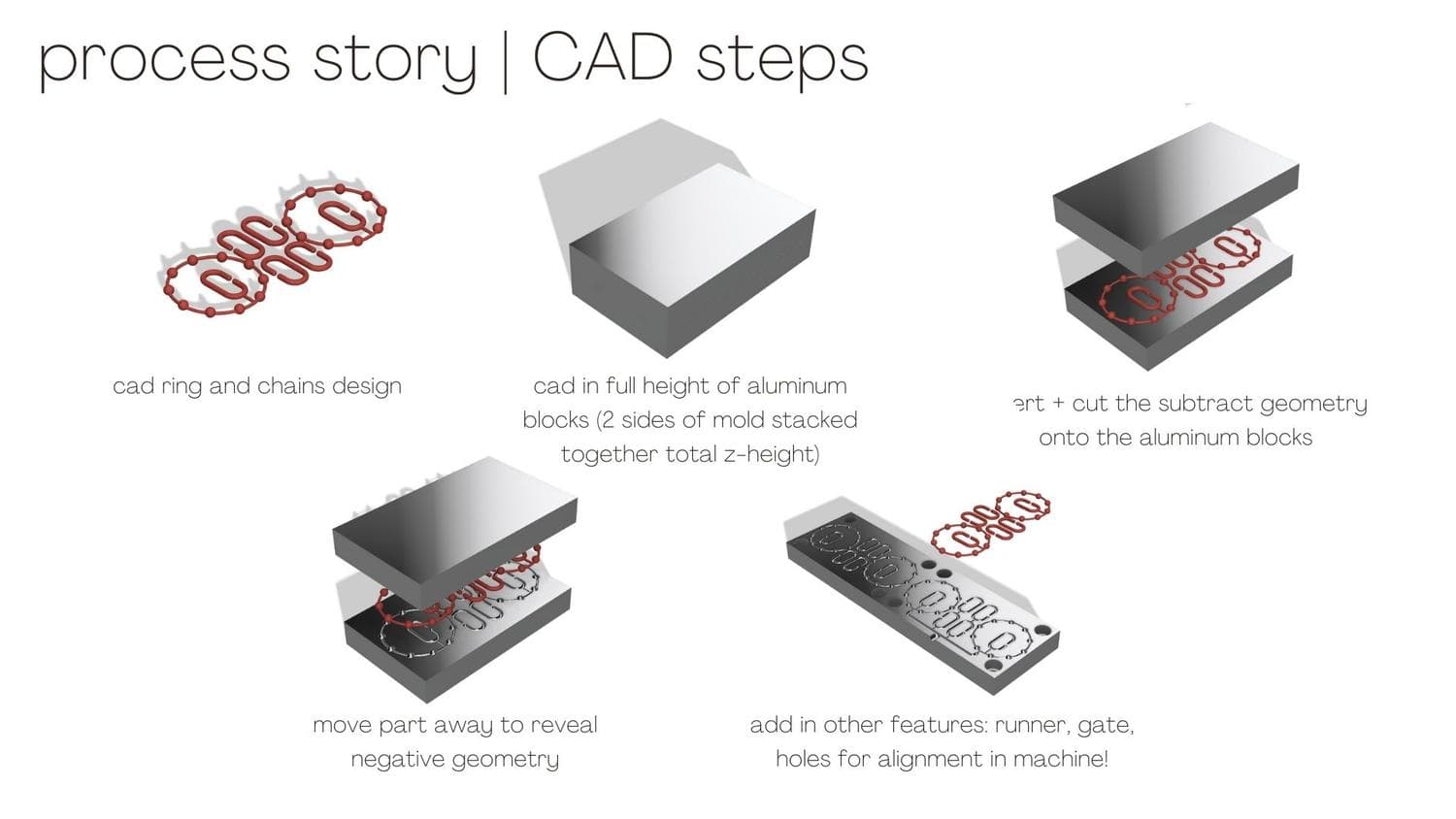
The mold is a small metal plate with multiple cavities, machined in the Stanford shop. Each cavity is carved with the geometry of a mesh, knit, or weave. Pigmented thermoplastic is shot into the tool, the plastic flows into the textile-like geometry, and what comes out is a part that drapes and reads like fabric while behaving mechanically as a polymer mesh.
The interesting outputs aren't really parts, they're material studies. They show that the perceived qualities of fabric, drape, openness, the rhythm of repeated yarn intersections, can be carried by a plastic geometry alone. As much as anything, the project was a forcing function for thinking about tooling: parting-line strategy, gate placement, runner sizing, vent geometry, and how all four of those decisions show up in the part once the press cycles.